
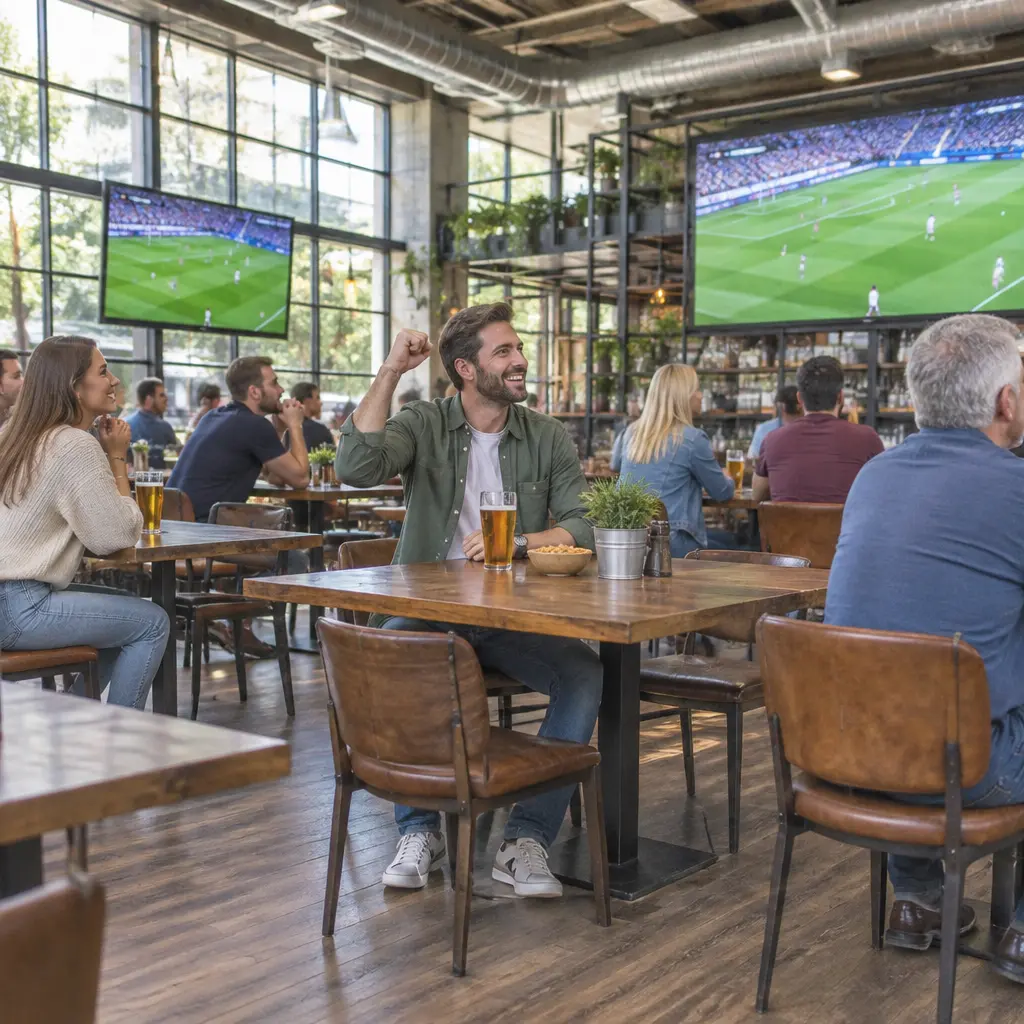
A sports bar feels electric on game day when the crowd, screens, sound, service, and setting combine to make watching feel like a shared event. The formula is more than loud televisions: venue design research, industry data, and examples from established sports bars point to clear sightlines, reliable broadcasts, responsive hospitality, and a sense of belonging as core ingredients. Together, these features shape the energy fans experience—and help explain why people choose to watch a game in a bar rather than at home.
How Game-Day Atmosphere Builds a Sports Bar’s Energy
A sports bar’s game-day atmosphere is the combined sensory and social experience created by its people, space, programming, food, and service. There is no single industry-standard measure of “electricity,” but operators can assess its ingredients through practical indicators such as attendance, repeat visits, guest feedback, order timing, and whether fans can comfortably follow the game.
The broader occasion has substantial reach. The National Retail Federation reported that 203.4 million U.S. adults planned to watch Super Bowl LVIII in 2024, including people who expected to watch at a bar or restaurant. That figure describes a major annual event—not typical turnout for every game—but it shows how sports viewing can bring large audiences together. The National Restaurant Association has likewise identified off-premises and on-premises dining as important parts of consumers’ social and entertainment routines.
Crowd energy and shared rituals
Crowd energy is the visible and audible response fans create together: cheers, chants, reactions to close plays, and conversation between strangers. A venue can encourage that connection with team colors, watch parties, trivia, supporter groups, and traditions such as a pregame toast. The goal is not simply maximum volume. It is a welcoming atmosphere where fans can join in without feeling that they must know every chant or statistic.
Major watch parties illustrate the effect. For the Super Bowl, some bars use reservations, themed menus, and scheduled activities to turn a broadcast into a social occasion. The NRF’s 2024 survey found that many viewers planned to celebrate with others, reinforcing the value of shared seating and group-friendly service. Local operators can apply the same principle on a smaller scale with rivalry nights, alumni gatherings, or supporter-club meetups.
Comfort, visibility, and belonging
A lively room works only if guests can comfortably experience it. Seating should provide reasonable views of the main screens, pathways should remain clear, and the venue should offer options for fans who want a quieter corner or an unobstructed view. Inclusive details—accessible routes and seating, clear menus, family-friendly areas where appropriate, and respectful staff—help broaden who feels welcome.
The National Institute of Standards and Technology’s guidance on accessible design emphasizes usable routes and spaces for people with disabilities. In a sports bar, accessibility is both a practical requirement and part of hospitality: guests should be able to enter, move through the room, order, and watch without avoidable barriers. That foundation makes crowd energy more sustainable because participation is not limited to one kind of fan.
How Screen and Sound Design Strengthen a Sports Bar’s Game-Day Experience
Screen and sound design is the deliberate arrangement of displays, audio, lighting, and seating so guests can follow the action. It is a central part of a sports bar’s atmosphere because a missed play or inaudible broadcast can break the shared experience. The best setup balances coverage and clarity rather than adding screens or volume without a plan.
Screen visibility and broadcast reliability
Screen visibility means guests can see the relevant game from their seats without excessive glare, obstruction, or awkward neck turning. A main screen can anchor the room, while secondary displays show other games or alternate angles. Operators should test sightlines from different tables and standing areas, confirm that channels and streaming feeds work, and prepare a backup plan for signal or equipment failures.
More screens are not automatically better. If every display shows a different event at competing volumes, guests may struggle to focus. A simple programming policy—such as prioritizing the local team on the main screen while assigning other games to designated displays—helps set expectations. Clear signage or staff guidance can also help guests find the game they came to watch.
Audio, acoustics, and lighting
Game audio carries commentary, crowd reactions, and the emotional rhythm of a broadcast. Directional speakers and thoughtful zoning can make sound clearer near the main viewing areas while leaving quieter seats for conversation. Acoustic treatments, including soft surfaces and carefully placed panels, can reduce harsh reverberation in rooms with hard floors and exposed walls.
Lighting also affects visibility and mood. Dimming nonessential lights can improve screen contrast, but the room should remain bright enough for guests to read menus and move safely. Operators can test the balance during a real broadcast, when screen glare and room noise differ from daytime conditions. No single decibel target suits every bar; the useful measure is whether guests can hear the game where intended without making conversation or staff communication unnecessarily difficult.
How Food and Hospitality Sustain a Sports Bar’s Game-Day Momentum
Food and hospitality sustain a sports bar’s momentum by helping guests stay engaged through the full event. Fast ordering, dependable food quality, and attentive service matter especially during breaks, halftime, and sudden surges in demand. A packed room can feel exciting, but if guests wait too long to order or cannot get help, the energy can turn into frustration.
Game-day menus and service timing
A game-day menu is designed around the needs of guests watching live sport: shareable dishes, familiar favorites, and items that can be prepared and served efficiently. Wings, sliders, nachos, and other group-friendly plates are common examples, though the right menu depends on the venue’s kitchen and audience. A focused menu can reduce ordering complexity and help kitchen teams manage predictable rushes.
The National Restaurant Association’s industry reporting regularly identifies labor, food costs, and operational efficiency as major restaurant concerns. For a sports bar, those pressures make preparation and coordination especially important. Staff can use timed prep, clearly assigned service zones, and mobile or table-side ordering where suitable. Operators should track ticket times and guest feedback rather than assume that a crowded room means service is working well.
Hospitality, safety, and responsible service
Hospitality is the consistent care guests receive before, during, and after the game. Staff who know the broadcast schedule, can answer basic questions about seating, and communicate delays calmly help the venue feel organized even when it is busy. Clear reservation policies and honest wait-time estimates also reduce uncertainty.
Responsible alcohol service is part of that same experience. The National Institute on Alcohol Abuse and Alcoholism notes that alcohol can impair judgment and coordination, while the Centers for Disease Control and Prevention identifies excessive drinking as a public-health risk. Sports bars can support safer celebrations by training staff, offering food and nonalcoholic choices, following local laws, and arranging ways for guests to get home safely. These practices protect guests and help preserve the venue’s welcoming atmosphere.
How Programming and Local Identity Give a Sports Bar Distinctive Energy
Programming and local identity distinguish one sports bar from another. Programming gives fans reasons to return beyond a single broadcast; local identity makes the venue feel connected to its community. Together, they turn an assortment of screens and tables into a recognizable gathering place.
Watch parties, promotions, and multiple sports
A watch party is an organized viewing event built around a particular game, team, or tournament. It may include reservations, themed food, giveaways, or a supporter-group gathering. Promotions can add interest, but they should be simple to understand and consistent with applicable rules. A calendar that includes different leagues and sports can also broaden the audience beyond one team’s fan base.
Major events provide useful examples of event planning at scale. Super Bowl watch parties demonstrate how a venue can coordinate reservations, crowd flow, menu preparation, and broadcast programming around a predictable peak. Smaller events—such as a local rivalry game or a championship final—can use the same planning principles without imitating a large national promotion.
Local teams, community ties, and feedback
A local sports identity can come from team colors, neighborhood history, memorabilia, partnerships with amateur clubs, or events that bring supporters together. These details help guests feel that the bar belongs to its community rather than functioning as a generic viewing room. Operators can invite feedback through comment cards, online reviews, or brief post-event surveys, then use recurring themes to improve seating, sound, menu choices, or scheduling.
A useful evaluation chart could compare attendance, average ticket time, repeat-visit intent, and guest ratings across different event types. Such a chart would help identify whether a promotion improves the experience or merely increases short-term crowd size. Measures should be interpreted together: attendance without service quality or repeat visits may not indicate a healthy game-day atmosphere.
Conclusion: The Elements That Make a Sports Bar Feel Electric
An electric sports bar combines crowd connection, comfortable and inclusive design, reliable screens and sound, efficient food service, responsible hospitality, and programming rooted in local identity. The scale of major viewing occasions—illustrated by the National Retail Federation’s estimate of 203.4 million U.S. adults planning to watch Super Bowl LVIII in 2024—shows the potential of shared sports experiences, while everyday success depends on executing the basics consistently.
For operators, the next step is to assess the room from a guest’s perspective: test sightlines, check audio by seating area, review service timing, and ask fans what would make them return. For guests, choosing venues that combine excitement with accessibility, good service, and responsible practices helps support stronger community gathering places.
Sources: National Retail Federation, Super Bowl LVIII consumer survey and press release, https://nrf.com/media-center/press-releases/nrf-survey-203-4-million-adults-plan-to-watch-super-bowl-lviii; National Restaurant Association, State of the Restaurant Industry, https://restaurant.org/research-and-media/research/research-reports/state-of-the-restaurant-industry/; National Institute of Standards and Technology, Accessibility of Buildings and Facilities, https://www.nist.gov/; National Institute on Alcohol Abuse and Alcoholism, Alcohol’s Effects on the Body, https://www.niaaa.nih.gov/alcohols-effects-health/alcohols-effects-body; Centers for Disease Control and Prevention, Alcohol Use and Your Health, https://www.cdc.gov/alcohol/about-alcohol-use/.


