A sports-bar seat is more than a place to sit: it determines how clearly you can follow the game, hear the broadcast, talk with your group, and reach food and drinks. To pick the best seat, first consider your priorities—sightlines, screen size, sound, crowd atmosphere, and comfort—then check the room layout and ask staff about reserved or high-demand spots. This guide explains how to assess those factors, compare common seating options, and make a practical choice for different games and groups.
How to Choose a Sports-Bar Seat for the Best View
There is no universally best seat: the right choice depends on the venue’s screen arrangement and what you want from the outing. A seat directly facing the main screen may be ideal for following play, while a booth near several displays can be better for a group or a game being shown on multiple channels. The key test is whether you can see the important screens without twisting, obstruction, or glare.
Start with your viewing priorities
Decide whether your main priority is seeing one featured game, keeping up with several games, or sharing a lively social experience. For a single game, favor a seat with a direct view of its screen. For a multi-game visit, look for a position where you can see more than one display. If conversation matters most, a booth or table slightly away from the loudest speaker may be a better fit than a front-row seat.
Scan the room before committing
Check for pillars, hanging fixtures, crowded walkways, and seated customers who could block your view. Take note of window reflections and overhead lighting, which can make a screen difficult to see from certain angles. If possible, look at the room from the seat itself rather than judging from the entrance; a seemingly open spot may have a poor sightline once the bar fills.
Once you know what a good view means for your visit, compare the room’s common seating areas. Each type offers a different balance of screen access, atmosphere, and convenience.
How Sports-Bar Seating Affects the Viewing Experience
Sports-bar seating is the arrangement of stools, tables, booths, and standing areas in relation to screens, speakers, service points, and circulation paths. There is no single standard layout, so the same seat type can perform differently from one venue to another. In practice, the useful categories are screen-facing seats, bar seats, booths, and flexible or standing areas.
Screen-facing tables and central seating
A table facing the primary screen is often the strongest choice when one game is the focus. It can provide a stable viewing angle and room for food, drinks, and conversation. Check that everyone in your party can see the screen; a seat at the end of a long table may require one person to turn sideways throughout the game.
Bar seats
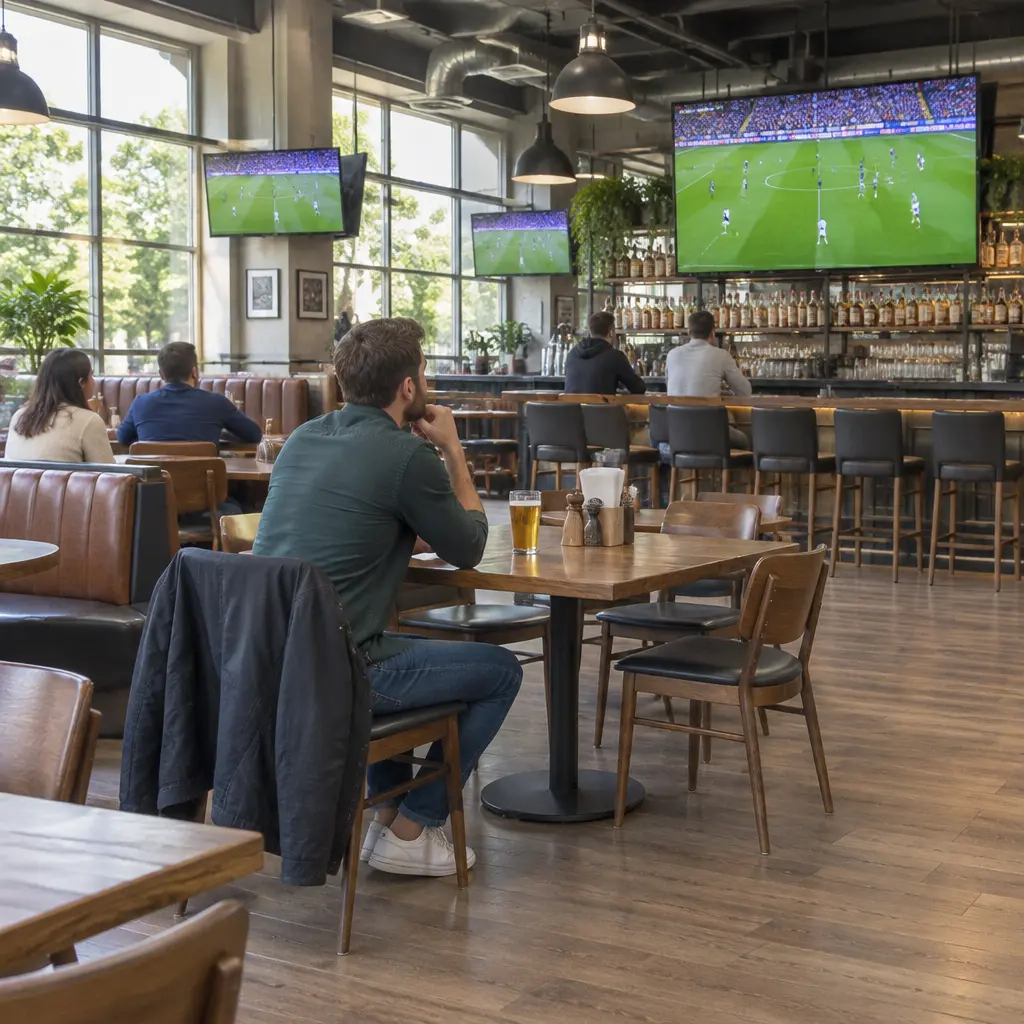
Bar stools can offer an unobstructed view of screens mounted behind or above the bar, and they may make it easier to order directly from staff. They can also be close to service traffic, equipment, and conversation around the bar. Before choosing one, confirm that the screen is at a comfortable angle and that the stool is not positioned where customers or staff repeatedly pass between you and the action.
Booths and group seating
Booths work well for families and groups who want space to talk and eat, but their backs or nearby partitions may obstruct a low-mounted screen. Choose a booth with a clear view from every seat, or ask whether the venue can tune a nearby display to your game. For larger parties, consider whether the group would rather sit together with a partial view or split into smaller tables with better sightlines.
Standing areas and high-top tables
Standing areas and high-tops can provide flexibility when the venue is busy and may offer a better view over seated crowds. They are less suitable for guests who need accessible seating, have mobility concerns, or prefer a long, comfortable stay. Keep entrances and aisles clear, and ask staff before settling in an area that may be reserved or used for service.
Seat type is only part of the decision. Distance, angle, sound, lighting, and the room’s crowd pattern can make two similar seats feel very different.
How Screen Position, Sound, and Comfort Shape Seat Choice
Distance and viewing angle
A comfortable seat lets you follow the screen without craning your neck or leaning around other people. A screen that is close but far off to one side may be harder to watch than a more distant screen directly ahead. If the venue has several displays, identify which one carries the broadcast you care about; do not assume the largest or most central screen is showing your game.
Audio and crowd noise
Sound matters when you want commentary, play-by-play, or the atmosphere of a big moment. Speakers near a screen may improve audibility, but seats beside speakers can feel overpowering. Background conversation also varies by location: bar areas and main walkways are often active, while a side booth may be calmer. If you have hearing needs, ask staff which area has the clearest broadcast audio.
Lighting, glare, and obstructions
Reflections from windows, polished surfaces, or bright fixtures can reduce screen visibility, especially during daytime games. Look for a seat where light does not fall directly across the display. Also check whether decorations, menu boards, support columns, or people standing at the bar can block the view during busy moments.
Comfort and service access
A good viewing seat should also suit the length of the event. Consider stool height, back support, table space, access to restrooms, and how easily servers can reach you. Seats beside a doorway or service station may be convenient but exposed to frequent traffic. If you expect to stay through a full game, prioritize comfort and a clear route over a marginally closer view.
How to Pick a Seat for Different Games and Groups
High-demand games and major events
For a playoff game, rivalry matchup, or championship, arrive early or call ahead to ask about reservations, minimum spends, and screen assignments. A preferred seat may be held for reservations or unavailable once the room fills. Ask the host which area will show the game and whether the sound will be on; policies can vary by event and venue.
Multiple games at once
When several games are being shown, choose a seat with a broad view of the displays rather than one that optimizes only a single screen. Tell staff which matchup matters most, since they may be able to direct you to the right section or adjust a nearby television when venue policy allows. If you are following a particular team, verify the channel before ordering or settling in.
Families, accessibility, and mixed-age groups
For families, look for a table that keeps children away from busy walkways while still providing a usable screen view. Guests with mobility or accessibility needs should call ahead to ask about step-free access, suitable tables, accessible routes, and restroom access rather than relying on assumptions about the layout. A quieter edge of the room may also make it easier for a mixed-age group to talk and eat.
Solo viewers and social groups
Solo guests may find a bar seat convenient for watching and ordering without taking up a large table. Groups who want to celebrate together may prefer a booth or high-top near the action, provided everyone can see and hear. Decide whether the priority is shared conversation or uninterrupted viewing, then choose a location that supports that goal.
A short conversation with staff can resolve uncertainties that are difficult to judge from the entrance. Use a simple checklist before you settle in.
How to Check a Sports-Bar Seat Before Settling In
- Confirm which screen is showing your game and whether the broadcast audio will be on.
- Sit or stand briefly in the proposed spot to check the view from your actual position.
- Look for glare, pillars, hanging fixtures, traffic, and people likely to block the screen.
- Check whether everyone in your party can see comfortably without turning or leaning.
- Ask about reservations, screen changes, accessibility, and any event-specific seating rules.
- Consider comfort, service access, and noise—not just how close the seat is to the screen.
For example, a group watching a championship game may initially prefer the bar because it faces the largest display. If that spot is crowded and loud, a nearby high-top with a clear view of the same screen may offer a better overall experience. The best choice is the one that keeps the game visible while fitting the group’s needs.
Conclusion: Choose the Seat That Fits the Game
The best sports-bar seat balances a clear sightline with comfortable distance, audible broadcast sound, low glare, and practical access to food and service. Screen-facing tables, bar seats, booths, and high-tops each have advantages, but the room layout and your priorities determine which works best. For major games, plan ahead; for any visit, verify the screen and view before settling in. Call the venue if you need a reservation or accessible seating, then choose the spot that lets you enjoy both the game and the company.
Sources: No external sources used.