
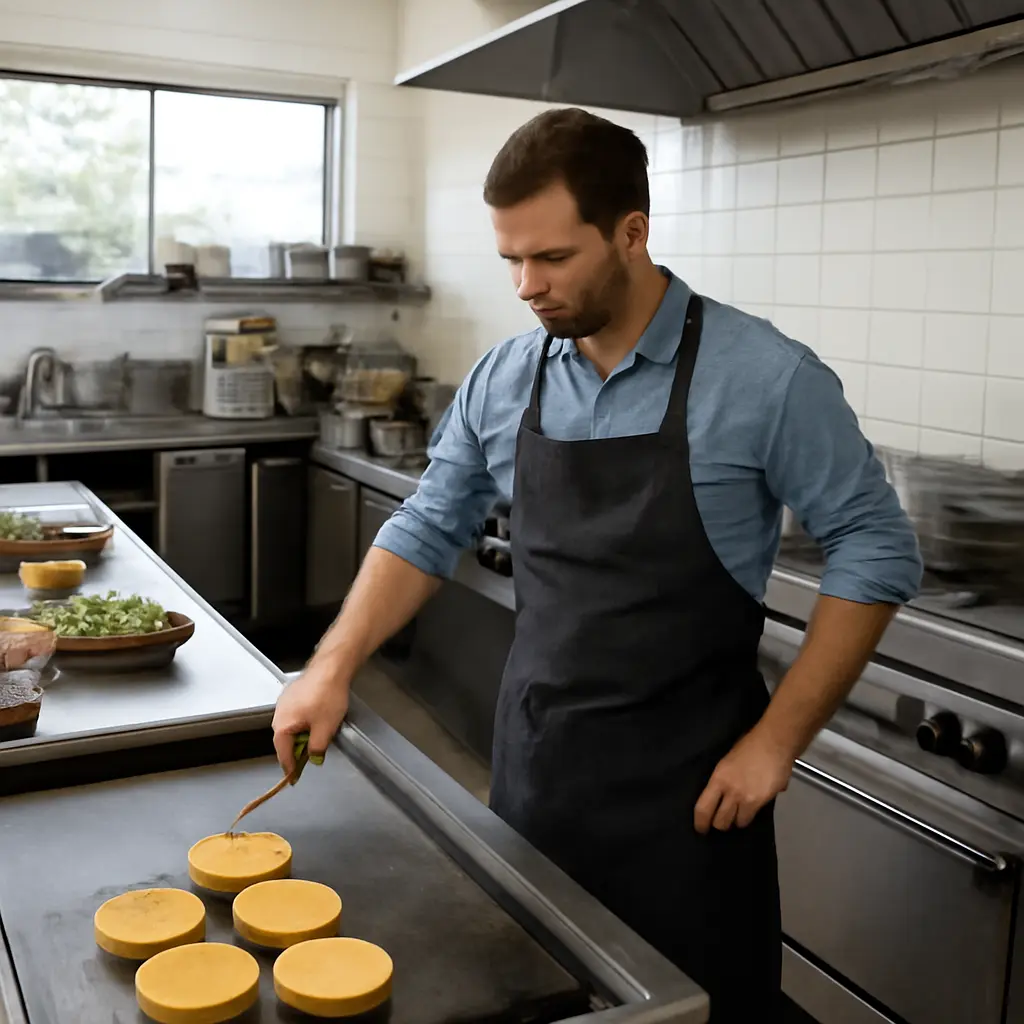
A pulled pork sandwich is only as good as the bread carrying it: the bun must stay tender enough to bite through, yet sturdy enough to hold juicy meat, sauce, and slaw without collapsing. Many bar kitchens miss that balance by serving oversized, dry, overly soft, or poorly toasted bread. The result is a sandwich that falls apart or overwhelms its filling. Bread science helps explain why: moisture migrates from the pork and sauce into the crumb, while crust, shape, and toasting affect how well a bun resists sogginess. The right choice is usually a modest, soft-but-resilient roll, lightly toasted at the cut face and assembled with moisture under control.
Pulled pork sandwich bread performance: structure, moisture, and bite
Bread performance means how well a bun holds its shape and texture while a diner lifts, bites, and eats the sandwich. Food scientist Harold McGee explains in On Food and Cooking that bread’s structure comes from a network of starch and proteins that sets as dough bakes; its pores then absorb liquid from moist fillings. That makes bun selection more than a matter of flavor: crumb structure and surface treatment determine whether pork juices and sauce stay in the sandwich or turn the bread gummy.
A pulled pork sandwich places unusual demands on bread. Shredded meat creates many small contact points, sauce adds liquid, and toppings such as slaw may contribute more moisture. A good bun therefore needs a soft bite, enough internal strength to support the filling, and a cut surface that can slow liquid absorption. These principles lead to three practical categories: bun structure, moisture management, and service consistency.
Bun structure: soft is not the same as weak
A bun’s crumb is the soft interior; its crust is the outer layer formed during baking. A very airy, fragile crumb can compress under a generous pork portion, while a dense or thick-crusted roll can make the sandwich tough to bite. For most bar-style pulled pork, a medium-soft roll with a close, even crumb offers a useful middle ground: it yields under the teeth but does not immediately flatten or split.
The American Institute of Baking’s baking guidance describes bread quality in terms that include volume, crumb texture, and crust characteristics. In practical service, the goal is not maximum volume. An oversized bun makes the diner work through excess bread before reaching the pork; an undersized bun lets the filling spill out. Match the roll’s diameter and strength to the portion, and check that it can be held with one hand after filling.
Moisture management: sauce and slaw can overwhelm the crumb
Moisture migration is the movement of water from a wetter food into a drier one. In a sandwich, pork juices, barbecue sauce, and wet slaw can migrate into the bread, softening the crumb over time. The USDA Food Safety and Inspection Service emphasizes that cooked foods should be handled and held safely; from a quality perspective, the same service window matters because a sandwich assembled too early has more time to become soggy.
A useful kitchen fix is to control liquid before it reaches the bun: drain excess cooking liquid from the pork, sauce the meat rather than flooding the bread, and keep slaw well drained. If the sandwich is built to order, the bun spends less time in contact with wet filling. A thin layer of a compatible fat or spread on the cut surface can also slow absorption, but it should complement the pork rather than mask its flavor.
Toasting: a light barrier, not a hard shell
Toasting is brief surface heating that dries and browns the cut face of bread. It can add flavor and delay the softening caused by wet fillings. The Maillard reaction, described by food scientists as a set of browning reactions between amino acids and sugars, contributes toasted aromas and color. However, excessive heat creates a hard surface that can crush the soft crumb or make the sandwich difficult to bite.
Toast the interior faces just until lightly golden, using a griddle or grill with consistent heat. Avoid scorching the outside or serving a bun so crisp that it fractures under pressure. A quick staff test is simple: press the filled sandwich gently. The bun should spring back somewhat, and the cut face should not feel wet or paste-like.
Pulled pork sandwich bread choices: matching bun types to the filling
Once the structural requirements are clear, choosing a bread style becomes easier. Common options include potato rolls, brioche-style buns, classic hamburger buns, and sturdier rolls. Each can work, but no label guarantees performance: recipes differ in size, sweetness, fat content, and crumb. Kitchens should evaluate the actual bun with their own pork portion, sauce, and toppings rather than relying on the name alone.
Potato rolls: tender crumb with a gentle bite
Potato rolls are enriched breads that commonly use potato flour or potato flakes to create a soft, moist crumb. Their tenderness pairs well with pulled pork, especially when the meat is not excessively wet. Their main risk is fragility: a very soft roll can compress or tear under a large portion, so it is best suited to a moderate filling and a brief, controlled toast.
Brioche-style buns: rich flavor, but watch the sweetness
Brioche is an enriched bread traditionally made with butter and eggs, giving it a tender texture and rich flavor. That richness can complement smoky pork, but a sweet, buttery bun may compete with sweet barbecue sauce. It may also be softer than the filling requires. Choose a less-sweet version and test it with the restaurant’s sauce before making it the default.
Classic buns and sturdier rolls: dependable only when properly sized
A standard hamburger bun can provide a familiar, neutral flavor and predictable portion size. A sturdier roll may carry a heavier serving, but a thick crust or dense crumb can dominate the bite. The useful test is the filling-to-bread balance: diners should taste pork in the first bite without the bun collapsing or requiring excessive chewing.
Pulled pork sandwich bread failures: why bar kitchens get it wrong
Most bread failures are operational rather than mysterious. A bun that works in a tasting may fail during a busy service if it is stale, toasted inconsistently, assembled too early, or paired with a larger portion than the recipe intended. Food waste and customer dissatisfaction make these details commercially relevant. The U.S. Environmental Protection Agency identifies wasted food as a major source of municipal solid waste, while restaurant operators also bear the direct cost of discarded ingredients and remakes.
Choosing by price or appearance instead of performance
A glossy, oversized bun may look appealing on a delivery photo but still be too sweet, too thick, or too fragile for the actual sandwich. Test candidate breads under realistic conditions: use the standard pork weight, sauce amount, toppings, and expected time from plating to first bite. Record whether the bun tears, compresses, or turns soggy, then adjust the bun or assembly method rather than guessing.
Inconsistent portions and rushed assembly
A bun designed for a modest serving cannot reliably support a mound of extra pork and wet slaw. Standardizing portion sizes and draining the meat consistently helps the bread perform as intended. Assembly order matters, too: place the pork on the toasted cut face, keep excess sauce off the bread, and add slaw shortly before service. For takeout, use packaging that allows some steam to escape; trapped steam can soften the bun even when the bread itself is well chosen.
Pulled pork sandwich bread quality: a practical kitchen check
A short, repeatable test can identify a better bun more reliably than supplier descriptions. Prepare several candidate rolls with the same recipe, then evaluate them at plating and after a realistic hold. A simple scorecard can cover bite, structural integrity, moisture resistance, flavor balance, and consistency between batches. The comparison can be shown in a kitchen chart with bun type on one axis and those five performance criteria on the other.
- Use the restaurant’s standard serving weight of pork, sauce, and toppings.
- Toast each bun’s cut faces lightly and consistently.
- Check the sandwich immediately and again after the normal service or delivery interval.
- Note whether the bun holds together, whether the filling stays in place, and whether bread flavor competes with the pork.
- Repeat the test with a second delivery or batch to catch variation.
This process turns a subjective complaint—“the bread is bad”—into actionable criteria. If the bun collapses, choose a stronger crumb or reduce excess liquid. If it feels dry or tough, shorten the toast or switch to a softer roll. If it tastes too sweet, test a more neutral bread. If it becomes soggy only during delivery, adjust assembly timing and packaging.
Conclusion: make the bread work for the pulled pork
The best pulled pork sandwich bread balances structure, moisture resistance, and a tender bite. Bun type matters, but portion size, sauce control, light toasting, assembly timing, and packaging matter just as much. Bar kitchens can avoid the common failures by testing bread under real service conditions, standardizing the build, and checking how the sandwich holds up before it reaches the guest. Review the bun at your next menu test: if it overwhelms the pork, collapses, or turns soggy, change the bread or the process before accepting the result.
Sources: Harold McGee, On Food and Cooking: The Science and Lore of the Kitchen, Scribner, 2004, https://www.haroldmcgee.com/; American Institute of Baking, Baking and bread quality resources, https://www.aibinternational.com/; U.S. Department of Agriculture, Food Safety and Inspection Service, Food safety guidance, https://www.fsis.usda.gov/; U.S. Environmental Protection Agency, Sustainable Management of Food, https://www.epa.gov/sustainable-management-food.


