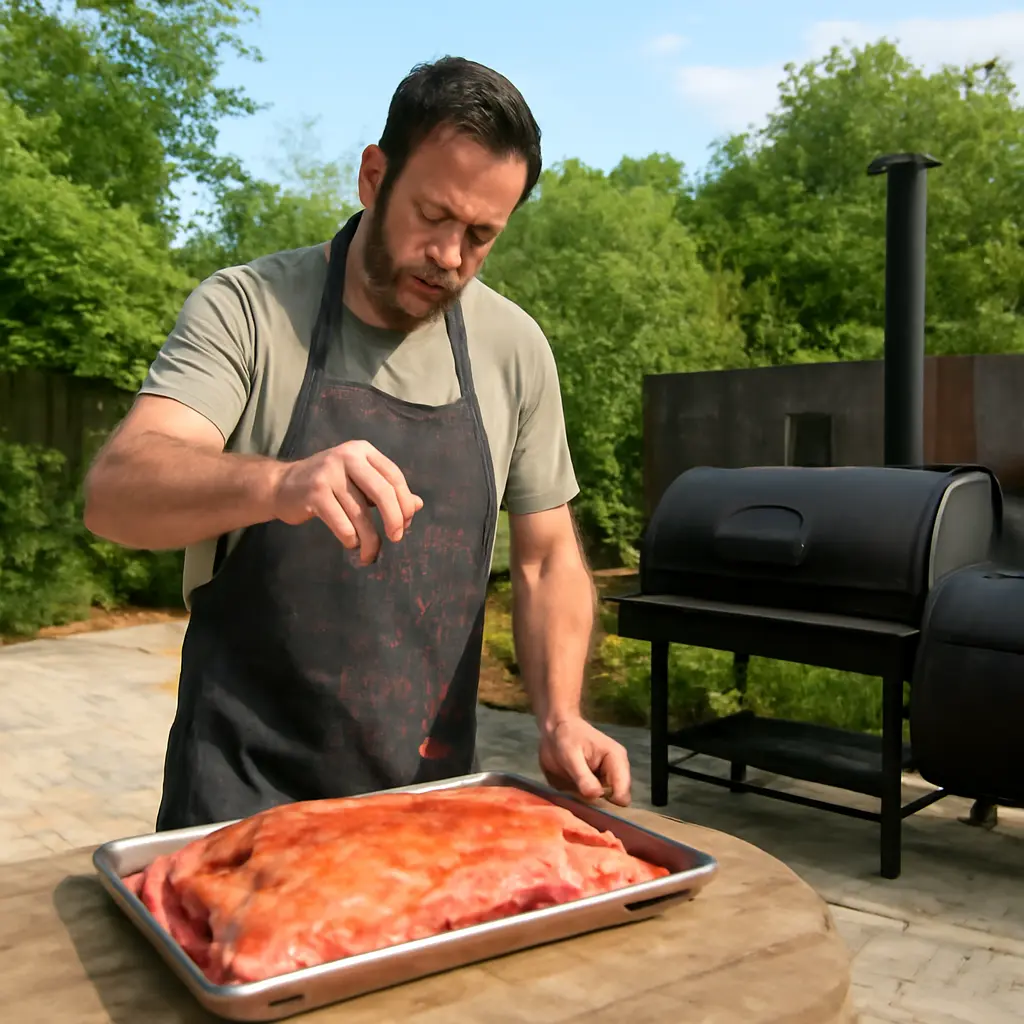
Dry rubs and wet rubs are two ways to season barbecue before it goes into the smoker: a dry rub is a blend of dry ingredients, while a wet rub combines seasonings with liquid or a moist ingredient to form a paste. Neither wins every long smoke. A dry rub is usually the more dependable choice for a well-set bark and straightforward seasoning; a wet rub can help spices cling and contribute flavor, but its added moisture does not automatically make meat juicier. The best choice depends on the cut, cook temperature, ingredients, and the bark you want. Food-safety guidance, barbecue science, and practical examples all point to the same principle: control the smoke and meat temperature, and choose the rub for its specific job.
Dry and Wet Rubs: How Each Performs During a Long Smoke
A rub is a surface seasoning applied before cooking. In barbecue, “long smoke” commonly means cooking a large cut such as pork shoulder or brisket for several hours at low heat, though there is no single official time that defines it. The distinction that matters is composition: dry rubs contain no added liquid, while wet rubs use oil, mustard, water, vinegar, or another moist ingredient to bind the seasonings.
For most brisket and pork-shoulder cooks, a dry rub is a strong default because it is easy to apply evenly and can build a robust surface crust. A wet rub is useful when the seasoning needs help adhering or when its liquid ingredients contribute a flavor you specifically want. Neither method seals in juices: moisture retention is driven chiefly by the cut, cooking conditions, and the meat’s internal temperature and rest. The USDA’s safe-minimum guidance for whole cuts of beef and pork is 145°F followed by a three-minute rest; barbecue cuts cooked until tender often go beyond that for texture, not because a rub makes them safe.
Dry Rub Texture and Bark in Long-Smoked Meat
A dry rub is a mixture of dry seasonings applied directly to the meat. The Kansas City Barbeque Society’s barbecue judging guidance treats appearance, taste, and tenderness as distinct qualities, a useful reminder that a flavorful crust is only one part of a successful result. Common dry-rub ingredients include salt, black pepper, paprika, chili powder, garlic, onion, and sugar.
Salt-and-pepper rubs for brisket
A salt-and-pepper rub is a simple dry blend, often made with roughly equal parts kosher salt and coarse black pepper, although cooks adjust the ratio to taste. It suits brisket because it emphasizes beef flavor and leaves a coarse, savory surface. Salt can draw moisture to the surface at first; over time, that liquid dissolves some of the salt, and the seasoned moisture can move back into the outer layers. This is why applying salt well ahead of cooking—or shortly before it—can be more predictable than salting during the brief interval when the surface is wet.
For a long smoke, apply the seasoning in an even layer rather than packing it into a thick blanket. The surface will dry as the cook proceeds, helping the crust form. A rub cannot compensate for poor temperature control, excessive smoke, or a brisket taken off before it is tender.
Sugar-forward rubs for pork
A sugar-forward dry rub combines sugar with salt, spices, and aromatics. It is common on pork ribs and shoulder, where sweetness can balance savory, smoky, or chili flavors. Sugar contributes browning when the surface is hot enough, but it can darken or scorch if exposed to excessive heat. For low-and-slow cooking, use a measured amount and judge the finished bark by color and flavor rather than assuming that more sugar means a better crust.
This style works particularly well when the meat will be served with a tangy sauce or vinegar-based slaw. The seasoning can be adjusted to suit the dish without making the rub itself overly sweet.
Bark formation and rub application
Bark is the dark, flavorful exterior that develops as meat dries, seasonings concentrate, and surface proteins and sugars undergo heat-driven changes. It is not simply a coating created by the rub. Smoke exposure, airflow, cooking temperature, surface moisture, and time all influence the result. A dry rub helps provide the seasoning layer, but the smoker’s conditions determine how that layer develops.
If the seasoning falls off during handling, apply it to a slightly tacky surface or use a thin binder such as mustard. A binder may be wet, but that does not necessarily make the final seasoning a wet rub: it can function only as an adhesive, with little noticeable flavor after cooking. This distinction leads to the practical difference between a binder and a genuinely paste-like wet rub.
Wet Rub Moisture, Adhesion, and Flavor
A wet rub is a seasoning blend mixed with enough liquid or moist ingredients to make a paste. Typical binders include oil, mustard, vinegar, Worcestershire sauce, and puréed aromatics. Its key characteristic is not that it “locks in” meat juices, but that it carries seasonings in a moist mixture and can help them adhere to an irregular surface.
Oil-based and mustard-based pastes
An oil-based paste combines dry spices with a small amount of cooking oil. It can spread evenly over ribs, poultry, or pork shoulder, and the oil carries fat-soluble flavors from ingredients such as paprika and pepper. Use a thin coat: a heavy layer can become greasy and may make the exterior take longer to dry.
Mustard is a familiar barbecue binder because it is easy to spread and clings well. After a long cook, its sharpness generally becomes less prominent, while the dry seasonings remain. A thin mustard layer is therefore often used to help a dry rub stick, rather than to create a strongly mustard-flavored wet rub.
Vinegar, citrus, and other liquid-based rubs
Vinegar- or citrus-based pastes add acidity, which can brighten the overall flavor and complement rich pork or fatty beef. However, an acidic wet rub is not the same as a controlled tenderizing process. Acid affects the outer surface and, with prolonged exposure, can make it unpleasantly soft; it does not reliably tenderize the center of a thick roast. Keep the mixture balanced and refrigerate meat during extended seasoning.
Liquid ingredients also change the surface conditions at the beginning of the cook. A wetter surface may need time to dry before a firm bark forms. That does not mean wet rubs cannot produce bark; it means the cook should avoid repeatedly adding liquid or disturbing the crust before it sets.
Wet rubs and the myth of sealed-in juices
A wet rub does not seal meat and prevent moisture loss. The USDA describes safe cooking in terms of internal temperatures and handling practices, not seasoning barriers. Juiciness depends on factors such as the cut’s fat and connective tissue, the degree of cooking, and how the meat is rested and sliced. A paste can add flavor and improve adhesion, but it cannot replace those controls.
The distinction is especially important in a long smoke, where cooks may be tempted to attribute tenderness or moisture to a marinade or rub. The rub mainly affects the outer portion of the meat; heat management and time shape the texture throughout the cut.
Choosing a Rub for Cut, Smoke, and Bark
The best rub is the one that suits the cut and desired finish. For a straightforward comparison, use the same meat, smoker, fuel, and cooking method, then vary only the rub. This makes it easier to tell whether the difference came from seasoning rather than a change in temperature, smoke, or timing.
Brisket: dry rub for a classic crust
For brisket, a coarse dry salt-and-pepper blend is a reliable choice when the goal is a dark, peppery bark that highlights beef. Apply it evenly and leave the meat undisturbed while the crust develops. A thin binder is optional; use it if the seasoning will not adhere, not because it is needed to preserve moisture.
Pork shoulder and ribs: choose sweetness or adhesion deliberately
Pork shoulder and ribs can take either style. A dry rub is straightforward and gives the cook close control over the surface seasoning. A wet paste can be convenient on uneven or slippery surfaces, and a small amount of oil, mustard, or vinegar can add a chosen flavor. If using sugar, keep heat and application in mind to avoid an overly dark or bitter exterior.
A practical side-by-side test
For a useful home test, divide comparable portions of the same cut between a dry rub and a wet rub. Keep seasoning intensity similar, record the ingredients and amounts, and cook the pieces under the same conditions. Compare bark texture, salt level, flavor, and tenderness separately. A simple chart can track rub type, ingredient proportions, cooking temperature, time, internal temperature, bark rating, and tasting notes; it is more informative than declaring a winner based on appearance alone.
For food safety, keep raw meat refrigerated while seasoning, prevent raw-meat juices from contacting ready-to-eat foods, and do not reuse a rub or marinade that has touched raw meat unless it is cooked thoroughly. The USDA recommends a minimum internal temperature of 145°F with a three-minute rest for whole cuts of beef and pork; ground meats require higher minimums. Low-and-slow barbecue often continues beyond the minimum because connective tissue needs time and heat to soften, but tenderness should be assessed independently from the rub choice.
Conclusion: Which Rub Really Wins?
For a long smoke, the dry rub is the better all-purpose choice when the priority is a clearly seasoned, dependable bark—especially on brisket. Wet rubs win when a paste makes seasoning easier to apply or when oil, mustard, vinegar, or aromatics are part of the intended flavor. Neither one seals in juices, and neither guarantees tenderness. Choose based on the cut and finish, keep the layer controlled, and pay closer attention to smoker conditions and internal temperature than to claims that one rub is universally superior. Try a matched side-by-side cook and record what you prefer.
Sources: United States Department of Agriculture, Safe Minimum Internal Temperature Chart, https://www.foodsafety.gov/food-safety-charts/safe-minimum-internal-temperatures; United States Department of Agriculture, Barbecue and Food Safety, https://www.fsis.usda.gov/food-safety/safe-food-handling-and-preparation/food-safety-basics/barbecue-and-food-safety; Kansas City Barbeque Society, Competition BBQ Judging, https://www.kcbs.us/competition-bbq/; Meathead’s AmazingRibs.com, The Science of Rubs, https://amazingribs.com/tested-recipes/rubs-and-pastes/science-rubs/