A well-planned seating setup gives a group places to eat, talk, and take breaks without forcing everyone to leave when an event runs late. For dinners, celebrations, and work gatherings, five useful options are one long banquet table, round tables, a U-shaped arrangement, a lounge-and-dining mix, and flexible zones with standing space. The best choice depends on the group’s size, the event’s purpose, the venue’s layout, and how long guests are expected to stay. That matters because the U.S. Bureau of Labor Statistics reports that Americans spent an average of 0.67 hours per day eating and drinking in 2023; an overtime event can keep guests seated well beyond an ordinary meal, making comfort and movement essential.
Overtime Seating Setups as a Guest-Comfort Attribute
Overtime seating setups are planned arrangements of chairs, tables, and adjacent standing or lounge areas that let guests remain comfortable when an event continues beyond its scheduled end. There is no single industry-standard definition of “overtime seating,” so the practical measure is whether the layout supports the event’s changing needs: eating, conversation, presentations, service access, and short breaks.
The U.S. Access Board’s accessibility standards provide a useful baseline for circulation: accessible routes generally require at least 36 inches of clear width, with specified exceptions. That is not a complete event-layout formula, but it highlights why extra chairs should not be added by narrowing paths. For long events, hosts should also consider seat support, table spacing, lighting, temperature, and access to restrooms and refreshments.
The five setups below are practical variations rather than rigid rules. They can be combined, and each works best when the seating plan matches both the social purpose and the venue’s constraints.
1. One Long Banquet Table for Shared Conversation
A banquet setup places guests along one elongated table, creating a shared focal point for meals, speeches, or family-style service. It suits wedding receptions, team dinners, and occasions where a unified group atmosphere is more important than easy mingling between separate tables.
For overtime, provide chairs with supportive backs, avoid crowding place settings, and keep service access clear along the table. A single table can make conversation feel cohesive, but people seated far apart may struggle to hear one another. Breaking a very long arrangement into shorter parallel tables can retain the communal feel while improving conversation and movement.
2. Round Tables for Smaller Conversation Groups
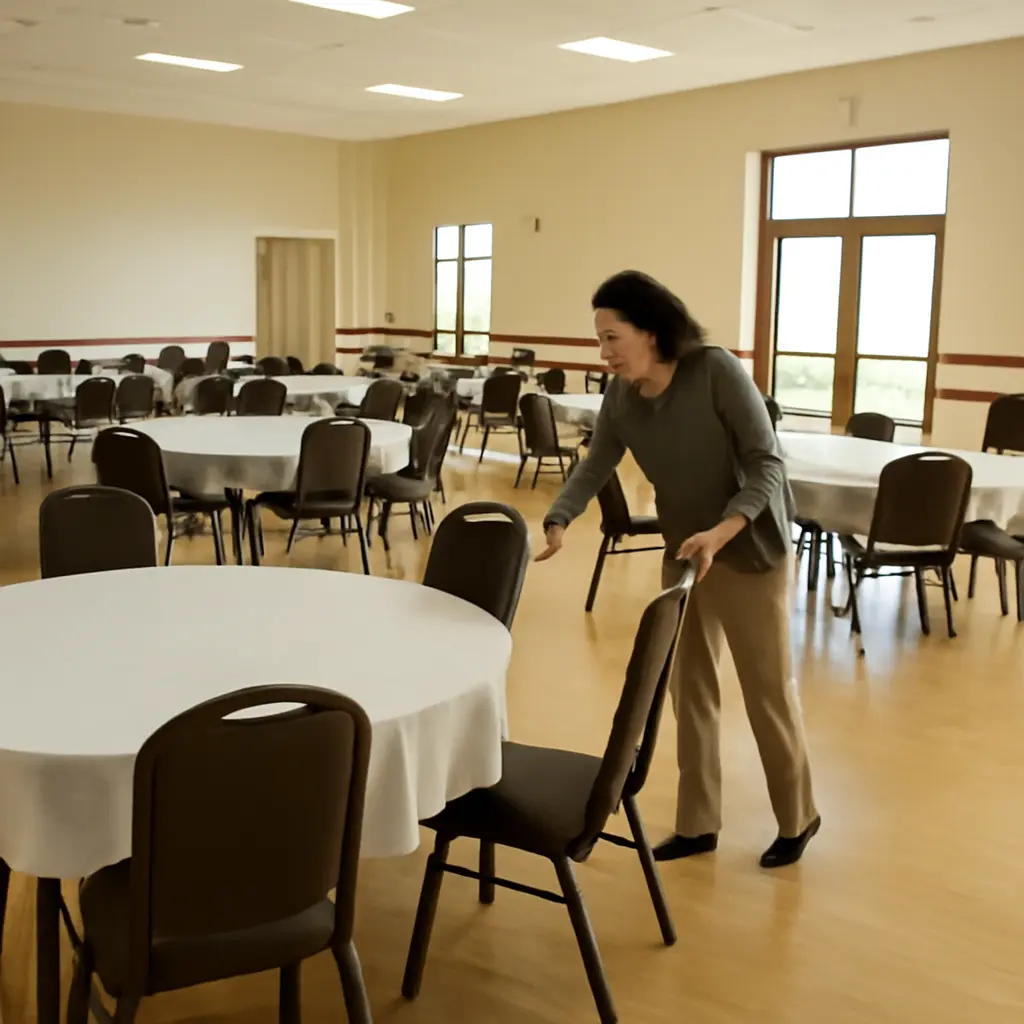
Round-table seating divides a larger gathering into smaller conversational circles. It works well for banquets, fundraisers, and conferences where guests need a defined place to eat but may not know everyone in the room.
This layout can feel more welcoming than one long table, though it may separate guests who want to talk across the whole group. For an event running late, leave enough room for chairs to move back and for servers or attendees to pass between tables. Keep essential pathways open, including accessible routes, rather than filling every gap with additional seating.
3. U-Shaped Seating for Discussion and Presentations
A U-shaped arrangement places tables and chairs around three sides of an open center. It is suited to workshops, board meetings, training sessions, and moderated discussions because participants can see one another and a presenter can address the group from the open end.
The open center can support demonstrations or presentations, but the layout uses more floor area than a compact row arrangement. To make it more comfortable through overtime, provide water nearby, plan a clear route in and out, and consider a separate break area so people can stretch without interrupting the discussion.
4. Lounge-and-Dining Mix for Long Social Events
A lounge-and-dining mix combines conventional dining tables with lower lounge seating, such as sofas or upholstered chairs. It is useful for receptions, celebrations, and informal networking where guests may shift from eating to relaxed conversation over time.
The variety offers guests a choice, but low tables and soft seating are not suitable for every meal or task. Retain standard-height tables and supportive chairs for guests who need them, and make sure lounge furniture does not obstruct accessible paths. A distinct dining zone also helps prevent guests balancing plates on seats or laps.
5. Flexible Zones with Standing Space and Quiet Seating
A zoned layout combines several small seating areas with open standing space, a refreshment point, and—where possible—a quieter corner. It is especially useful for receptions and mixed-format events that move between presentations, meals, and informal conversation.
Flexibility helps guests choose how to participate, but a standing area should never be the only alternative to a chair. Provide enough seats for people who need to sit, preserve clear routes, and keep food and drink stations from creating bottlenecks. A simple floor plan can show the intended circulation, seating, and service zones before furniture is placed.
Choosing an Overtime Seating Setup by Event Need
The right arrangement follows the event’s dominant activity. A shared meal may favor banquet or round tables; a discussion may need a U shape; a social reception may benefit from lounge seating and flexible zones. Before confirming the plan, estimate attendance, identify the venue’s fixed features, and ask how guests will move between seating, food, restrooms, and exits.
A practical planning checklist is:
- Choose supportive chairs for events expected to run long, and offer different seating types where feasible.
- Keep accessible routes and exits unobstructed; verify the venue’s applicable accessibility and fire-safety requirements.
- Separate food service and presentation areas from main circulation paths.
- Provide a place to stand, stretch, or take a quiet break without making those options a substitute for seating.
- Ask the venue to review the final floor plan, especially when the room is near capacity.
Conclusion: Comfortable Seating Helps Groups Stay Engaged
The five overtime seating setups—banquet tables, round tables, U-shaped seating, lounge-and-dining mixes, and flexible zones—serve different social and practical needs. The strongest plan pairs the event format with comfortable seats, clear circulation, and options for changing posture or taking a break. Before the next gathering, map the room, check accessibility and venue rules, and build the seating plan around how guests will actually use the space.
Sources: U.S. Bureau of Labor Statistics, American Time Use Survey—2023 Results, https://www.bls.gov/news.release/archives/atus_06272024.htm; U.S. Access Board, ADA Accessibility Standards, https://www.access-board.gov/ada/