
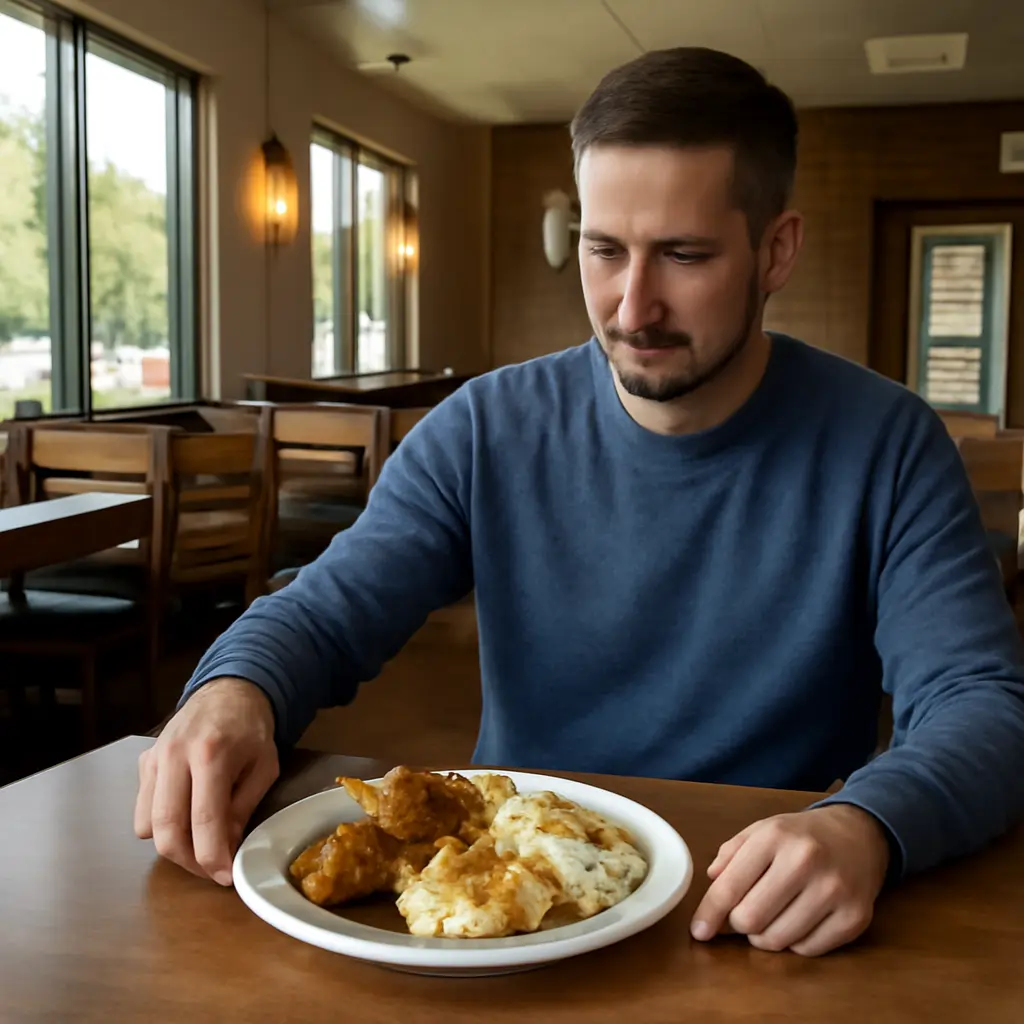
Casual dining chains have made many once time-consuming home-cooked meals easy to order, consistently prepared, and widely available. From slow-braised pot roast and hand-breaded chicken to layered casseroles and elaborate desserts, restaurants such as Cracker Barrel, Texas Roadhouse, and The Cheesecake Factory translate familiar cooking into repeatable menu items. Their appeal reflects a larger shift toward convenience: the U.S. Bureau of Labor Statistics’ American Time Use Survey reports that adults spent an average of about 37 minutes a day preparing food and cleaning up in 2023. Chain kitchens can reduce that effort for a meal, though the trade-off is that restaurant dishes often differ from home versions in price, portion, and nutrition.
Casual dining chains perfected time-intensive comfort food
A casual dining chain is a multi-location restaurant brand that typically offers table service, a broad menu, and a more relaxed setting than fine dining. In this article, “perfected” means standardizing familiar dishes so they can be produced consistently at scale—not proving that a restaurant meal is objectively better than a carefully made home version. The National Restaurant Association has described convenience and value as important drivers of restaurant use, while the industry’s broad reach makes chain restaurants a visible part of how Americans access prepared meals.
The foods that fit this story include slow-cooked meats, breaded and fried entrees, casseroles, comfort-food sides, and made-from-scratch-style desserts. Many require lengthy preparation at home, but restaurant operators can divide the work across suppliers, central kitchens, trained crews, and standardized equipment. That organization—not simply a secret recipe—is what allows a chain to deliver a familiar dish to customers in many locations.
Why these dishes once took hours
Traditional comfort foods often depend on several labor-intensive steps: trimming and seasoning meat, browning it, simmering it for tenderness, preparing sides, and washing cookware afterward. A pot roast may spend hours in a low oven or slow cooker; biscuits, gravy, and vegetables add more active work. A restaurant can make the meal feel effortless to the diner because the labor is completed before the plate reaches the table.
The time figures need context. The Bureau of Labor Statistics’ American Time Use Survey measures daily activities across the population, not the time required to cook a particular recipe. Its 2023 average of roughly 37 minutes per day for food preparation and cleanup illustrates the cumulative household burden, but it does not mean every dinner takes that long or that restaurant dining eliminates all meal-related time.
How chains turn home-style recipes into repeatable meals
Chain operators rely on recipes with fixed portions, written procedures, ingredient specifications, and staff training. Some components arrive prepared or partially prepared; others are finished in the restaurant. This division of labor helps produce reliable results while making service faster than starting every dish from raw ingredients after an order is placed. The exact balance varies by brand and menu item, so “made from scratch” should be understood as a specific company claim rather than a universal feature of casual dining.
Standardization also creates a recognizable experience across locations. A customer ordering a familiar entree can generally expect a similar flavor profile and serving format whether visiting a neighborhood restaurant or one in another state. That consistency is central to a chain’s promise, even though local execution and ingredient availability can still affect the final dish.
Slow-cooked entrees bring long-simmered flavors to restaurant tables
Slow-cooked entrees are dishes prepared over extended cooking periods to tenderize ingredients and develop flavor. Restaurants make them practical by planning production ahead of service, using large-capacity equipment, and portioning the finished food for orders. Pot roast, braised beef, and some stews are familiar examples of meals that may take hours to prepare at home but require comparatively little waiting for a diner once ordered.
Pot roast and braised beef
Pot roast is typically a large, tougher cut of beef cooked slowly with liquid and vegetables until tender. Braising uses a related method: the meat is often browned, then cooked gently in a covered vessel with some liquid. At home, the process can occupy much of an afternoon. In a restaurant kitchen, advance preparation and batch cooking allow the same style of dish to be served on demand.
Cracker Barrel is a notable chain example because its menu has long centered on country-style comfort food, including roast beef and traditional sides. The brand’s appeal illustrates how a restaurant can package a labor-intensive meal as a familiar, ready-to-eat combination. The broader lesson is operational: the customer receives the result of long cooking without managing the timing, equipment, or cleanup.
Ribs and other low-and-slow favorites
Ribs are another time-intensive dish because tenderness and flavor depend on careful cooking, seasoning, and finishing. Casual dining brands such as Texas Roadhouse and other steakhouse-style chains use established kitchen processes to coordinate preparation with busy service periods. A home cook may need to monitor a grill, smoker, or oven for hours; a restaurant organizes that work in advance and finishes portions as orders arrive.
These dishes also demonstrate the difference between elapsed time and hands-on time. Slow cooking may require many hours overall, but not every minute involves active labor. Chains’ advantage is less that they erase cooking time than that they absorb scheduling, advance preparation, and cleanup on behalf of the customer.
Fried chicken and homestyle sides make skilled preparation convenient
Fried comfort food brings together preparation, temperature control, and timing. Breaded chicken requires seasoning, coating, frying, and safe handling; sides such as mashed potatoes, gravy, and biscuits add further work. Restaurants concentrate these tasks in a dedicated kitchen, making a multi-part meal available without the diner having to prepare each component at home.
Breaded chicken and country-fried entrees
Breaded chicken and country-fried steak are examples of dishes whose appeal depends on a crisp coating and a hot, freshly served interior. Their preparation can be messy at home, requiring separate stages for seasoning, breading, cooking, and cleaning. Casual chains use measured portions and repeatable procedures to coordinate those steps during service.
Cracker Barrel’s country-style menu and family-dining restaurants’ fried-chicken offerings show how chains build a meal around recognizable techniques. The convenience is especially clear when an entree arrives with several sides: the restaurant has coordinated multiple preparations that might otherwise occupy different burners, pans, and stages of a home meal.
Mashed potatoes, biscuits, and gravy
Sides are often as labor-intensive as the main dish. Mashed potatoes require cooking and mashing; biscuits involve mixing, shaping, and baking; gravy needs careful preparation to achieve a smooth texture. Served together, these foods create a traditional comfort-food plate, but reproducing the full combination at home takes more coordination than preparing a single entree.
Restaurants benefit from making these components in batches and serving them across many orders. This is one reason a chain meal can feel like an abbreviated version of a large family dinner: several complementary dishes are available at once, without the customer needing to plan a menu or manage multiple cooking times.
Casseroles and family-style meals compress home cooking into one order
Casseroles and family-style meals combine ingredients or dishes into a convenient, shareable format. A casserole may require chopping, layering, baking, and resting, while a family-style spread requires planning several entrees and sides. Casual dining chains make these formats accessible by offering composed plates, shareable appetizers, and bundled meals that reduce the need for separate household preparation.
Layered casseroles and baked comfort food
A casserole is a baked dish that brings together ingredients such as meat, vegetables, starches, and sauce. It can be convenient to serve once prepared, but making one from scratch may involve several steps and a long baking period. Restaurant kitchens can prepare baked dishes ahead of service and portion them consistently, turning a home-style format into a practical menu item.
The category extends beyond a single recipe. Chicken-and-rice bakes, macaroni and cheese, and other baked sides all use the same basic advantage: multiple ingredients become one coordinated serving. In a restaurant, the diner gets the finished combination without buying ingredients, assembling the dish, or dealing with the baking pan afterward.
Family meals and shareable restaurant formats
Family-style dining makes several dishes available to a group, sometimes with shared sides or meal bundles. It can substitute for cooking a complete dinner at home, particularly when a household wants variety but has limited time to prepare several items. Casual chains also offer large portions and shareable starters, though the format and value vary by brand, location, and promotion.
For a real-world illustration, a group ordering a multi-item meal at a casual restaurant outsources menu planning, cooking, serving coordination, and dishwashing. The restaurant has not eliminated the labor; it has transferred it to paid staff and a commercial operation. That distinction helps explain both the convenience and the price of prepared meals.
Chain desserts make elaborate finishing touches easy to order
Desserts can require especially long preparation because they may involve mixing, baking, cooling, layering, and decorating. Restaurant chains make elaborate sweets easy to add to a meal by producing them in advance, sourcing them from specialized suppliers, or completing final steps in the kitchen. The result is a broad dessert selection without requiring diners to bake at home.
Layer cakes, pies, and restaurant portions
Layer cakes and pies require more than baking: they may need fillings, frosting, cooling time, careful cutting, and storage. The Cheesecake Factory is a prominent example of a casual dining brand known for a particularly extensive menu of cheesecakes and other desserts. Its display and menu model turns a dessert that would take considerable planning to make at home into a ready-to-order choice.
Restaurant portions can also be larger than a typical home serving, so convenience should not be confused with nutritional equivalence. The U.S. Food and Drug Administration requires covered chain restaurants with 20 or more locations doing business under the same name to provide calorie information on menus and menu boards. Checking those figures can help customers compare options while still enjoying a treat.
Seasonal treats and limited-time menus
Seasonal desserts and limited-time specials give chains a way to refresh familiar menus without asking customers to source specialty ingredients or develop a recipe themselves. These offerings may echo holiday baking, regional traditions, or popular flavors. Their availability is temporary, however, and recipes and nutrition information can differ across products and locations.
Convenience comes with trade-offs in cost, nutrition, and control
Casual dining can save household time, but the benefit should be weighed against price, portion size, and personal preferences. The Bureau of Labor Statistics’ Consumer Expenditure Survey tracks household spending on food away from home, showing that restaurant meals are a recurring budget category for U.S. households. Because spending varies with income, household size, location, and dining frequency, there is no single figure that describes what a chain meal costs every customer.
Nutrition information and portion awareness
Restaurant comfort foods can be rich in calories, sodium, saturated fat, or added sugars, depending on the dish and portion. The FDA’s menu-labeling rule helps customers make informed choices at qualifying large chains by requiring calorie disclosure for standard menu items. Nutrition information is a useful comparison tool, but it does not by itself determine whether a meal fits an individual’s dietary needs.
Customers who want a lighter meal can consider sharing a large entree, choosing vegetables or other sides, requesting sauces separately where available, or taking part of the meal home. These options preserve the convenience of restaurant cooking while giving diners more control over portions and meal composition.
Value, labor, and the meaning of “homestyle”
A restaurant price pays for more than ingredients. It also supports labor, rent, equipment, utilities, purchasing, food safety systems, and service. Conversely, a home-cooked meal may cost less per serving but requires the cook to supply time, planning, and cleanup. Comparing the two fairly means considering both money and labor.
“Homestyle” is a description of a culinary style, not a guarantee that a dish is prepared exactly as it would be in a household kitchen. Chains may use centralized sourcing, pre-prepared components, or commercial equipment to achieve consistency. Customers can look to menu descriptions and company disclosures for details rather than assuming every dish is fully made from scratch on-site.
Conclusion: Casual chains sell time as well as comfort food
Casual dining chains have made time-intensive comfort foods—slow-cooked entrees, fried dishes, substantial sides, casseroles, family meals, and elaborate desserts—readily available through standardized restaurant operations. Their central advantage is not that cooking disappears, but that commercial kitchens take on planning, preparation, timing, and cleanup that households would otherwise manage themselves.
The convenience matters in a country where food preparation and cleanup take a meaningful share of daily life, as the Bureau of Labor Statistics’ time-use data shows. At the same time, restaurant meals involve trade-offs in spending, portions, and nutrition. For further context, readers can consult the BLS American Time Use Survey and Consumer Expenditure Survey, the FDA’s menu-labeling guidance, and the National Restaurant Association’s industry research. When ordering, compare menu information, choose the format that suits your budget and needs, and treat “homestyle” as a style of cooking rather than a promise about every kitchen step.
Sources: U.S. Bureau of Labor Statistics, American Time Use Survey, https://www.bls.gov/tus/; U.S. Bureau of Labor Statistics, Consumer Expenditure Surveys, https://www.bls.gov/cex/; U.S. Food and Drug Administration, Menu Labeling Requirements, https://www.fda.gov/food/food-labeling-nutrition/menu-labeling-requirements; National Restaurant Association, Research and Media, https://restaurant.org/research-and-media/; Cracker Barrel Old Country Store, Menu, https://www.crackerbarrel.com/menu; Texas Roadhouse, Menu, https://www.texasroadhouse.com/menu; The Cheesecake Factory, Menu, https://www.thecheesecakefactory.com/menu.


