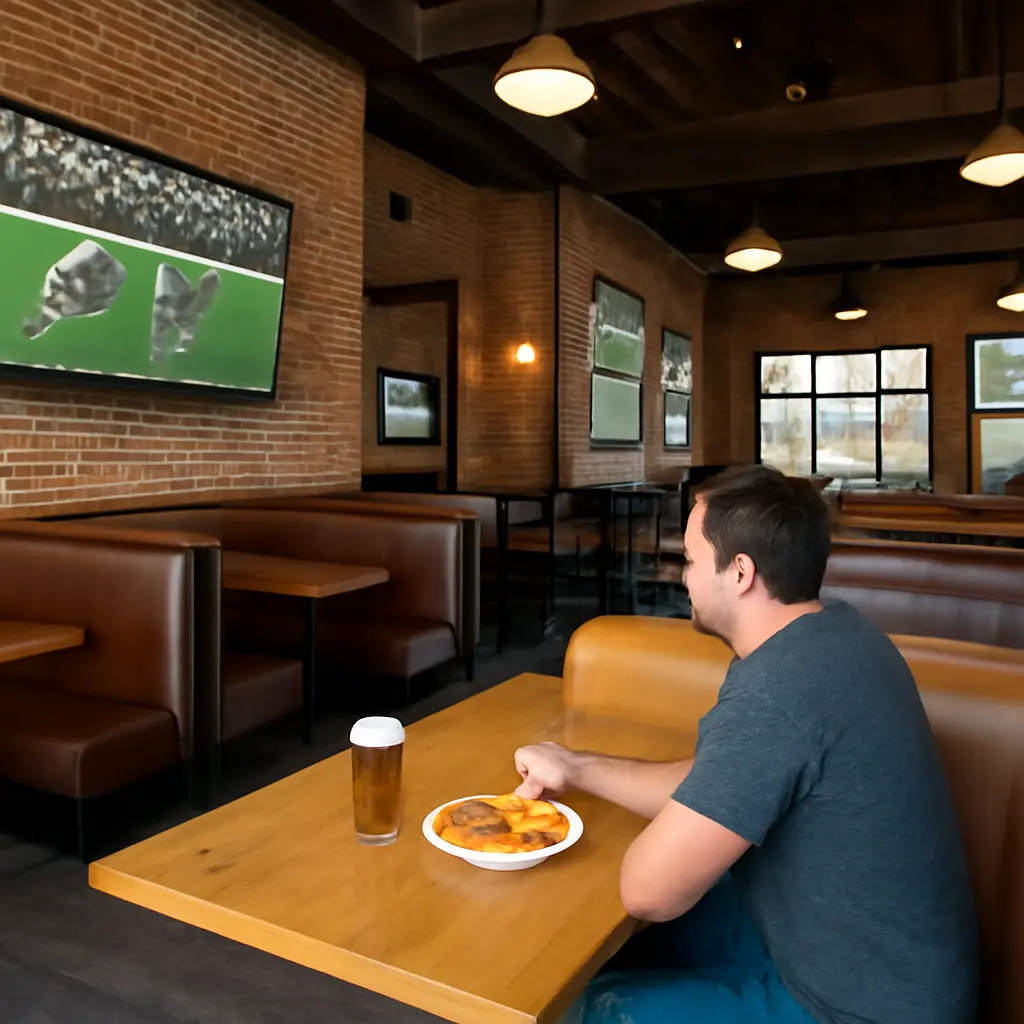
A sports bar is a restaurant or bar built around televised sports, food and drink, and a communal game-day atmosphere. But the category is broadening: many venues now pair screens and familiar pub food with family-friendly menus, games, comfortable seating, and activities that give people a reason to visit even when they are not following the score. That shift matters as restaurants compete for family outings and consumers watch spending closely. The National Restaurant Association’s 2024 industry report projected U.S. restaurant and foodservice sales of $1.1 trillion for the year, while its consumer research has repeatedly found that off-premises dining remains part of how Americans use restaurants. The modern sports bar is therefore less a one-purpose viewing room than a flexible hospitality venue—though families still have to weigh noise, hours, menus, and screen-heavy environments before deciding it suits them.
Sports bars broaden their appeal beyond live games
There is no single official definition of a “family-friendly sports bar.” The National Restaurant Association describes the restaurant industry as spanning a wide range of formats and service models; in practice, a family-oriented sports bar is a venue that combines sports viewing with dining and recreation in a way that accommodates different ages. That can mean children’s menus, alcohol-free choices, daytime hours, table service, arcade games, bowling, or outdoor seating—not simply more televisions.
The change is visible in the way operators position themselves. Some venues remain traditional bars centered on game broadcasts and late-night service. Others resemble family entertainment centers or casual dining restaurants that happen to show sports. The distinction matters: the same large-screen setup can feel welcoming at an afternoon baseball game and overwhelming during a crowded, high-volume evening event.
From neighborhood pub to all-ages outing
The traditional sports bar emphasized a shared viewing experience: numerous screens, prominent bar seating, and food designed for groups. Newer, family-conscious concepts widen that offer with activities and layouts that work for people who are not invested in the game. Bowling, arcade games, trivia, and casual tournaments create alternatives to watching a broadcast, while booths and separate activity areas can make a visit more manageable for families.
This evolution connects sports bars to the broader “eatertainment” category, where dining is combined with an activity. The National Restaurant Association’s 2024 report underscored the industry’s scale and competition: projected U.S. restaurant and foodservice sales reached $1.1 trillion. That figure does not prove that sports bars are becoming family destinations, but it helps explain why operators look for ways to distinguish the experience and encourage longer, group-oriented visits.
Screens are still the defining feature—but not the whole experience
A sports-focused venue depends on live and recorded broadcasts, but families increasingly judge the whole visit: sound levels, sightlines, seating, staff, menu variety, and whether non-fans have something to do. A room filled with screens can serve fans well while making conversation difficult. Venues that manage sound by zone, reserve quieter dining areas, or offer outdoor seating can make the same sports programming more compatible with mixed-age groups.
The practical takeaway is that “family-friendly” is a set of operating choices, not a guarantee attached to the sports-bar label. Parents may want to check event schedules, age policies, menu details, and peak-hour conditions before visiting.
Family-friendly sports bars adapt menus, space, and schedules
A venue becomes more accessible to families when it reduces the friction of dining with different ages and preferences. That means offering more than a children’s menu: flexible portions, nonalcoholic beverages, clear allergen information, convenient seating, and service that works for both quick meals and longer visits. The U.S. Department of Agriculture’s dietary guidance emphasizes varied, nutrient-dense choices across food groups; restaurant menus do not have to replicate a home meal, but variety gives caregivers more options than fried appetizers alone.
Menus that work for mixed-age groups
Sports-bar menus commonly feature shareable items such as wings, burgers, nachos, and fries. Family-oriented versions may add smaller portions, grilled choices, salads, fruit, or customizable dishes. The point is not that every family wants a “healthy” menu; it is that groups often include varied appetites, dietary needs, and budgets. A clearly explained menu and reliable options for children can make a venue easier to choose.
Cost is another consideration. The Bureau of Labor Statistics’ Consumer Expenditure Surveys track household spending on food away from home, providing a reminder that restaurant visits compete with other household expenses. Families can compare kids’ meal pricing, sharing portions, weekday promotions, and whether an activity or game charge is separate from the food bill.
Layouts that balance viewing and conversation
A family-ready layout gives guests choices. Booths away from speakers, tables with clear broadcast views, stroller-accessible paths, and designated game areas can help different parties use the space at once. Operators may also separate dining from bar seating or make some areas available to minors only during specified hours. These details are particularly important when a major event draws a crowd and normal noise levels rise.
Accessibility should be part of that planning. The U.S. Access Board’s accessibility standards address routes, seating, and other elements of the built environment. For guests with mobility, sensory, or other access needs, a venue’s layout and staff communication can matter as much as its menu or screen count.
Daytime hours and activities change who feels welcome
Some venues make family visits easier by scheduling children’s events, offering arcade games, or hosting activities during daytime and early-evening hours. This can distinguish a restaurant that welcomes families from a bar whose primary business is late-night drinking. Policies vary, however, and families should confirm age restrictions, event timing, and whether games require a separate fee.
The broader restaurant market also includes off-premises dining, takeout, and delivery. The National Restaurant Association has identified off-premises use as a lasting part of consumer restaurant behavior. For families, that means the sports-bar experience can extend beyond a visit: food ordered for a game at home is another way venues compete for the same occasion.
Families should assess the experience, not just the brand
A venue’s marketing may promise a lively, all-ages atmosphere, but the best fit depends on the family and the occasion. A quiet lunch, a birthday outing, and a championship game have different needs. Checking current details before leaving home can prevent surprises and help families choose a place where both fans and non-fans are comfortable.
Questions to ask before a visit
- Are children welcome at the time you plan to visit, and are there age or seating restrictions?
- Will a major game or event make the venue unusually loud or crowded?
- Does the menu offer suitable choices for children and guests with dietary restrictions?
- Are activities included, or do games and entertainment cost extra?
- Is there a quieter seating area, accessible route, or outdoor option?
A visit can be a useful real-world test
Families can start with an off-peak visit rather than a major rivalry game. That makes it easier to evaluate service, noise, seating, and food without the pressure of a packed room. If the venue works well, a later visit for a live event may be more enjoyable. Calling ahead is especially useful for confirming policies that can change by day, event, or location.
For operators, the same test offers a business lesson: family appeal is demonstrated through consistent details, not just promotional language. Staff training, thoughtful sound management, transparent pricing, and a menu with genuine choice can determine whether families return.
Conclusion: the sports bar is becoming a more flexible gathering place
Sports bars are changing as some operators combine live viewing with family-oriented menus, activities, varied seating, and broader hours. The $1.1 trillion in projected U.S. restaurant and foodservice sales cited by the National Restaurant Association in 2024 reflects a vast, competitive market, but it should not be mistaken for proof that every sports bar has become family-friendly. The real measure is whether a venue can balance screens and sound with comfort, access, price, and options for guests of different ages.
Families can make better choices by checking policies and event schedules, considering a quieter first visit, and looking beyond the brand to the actual layout and menu. Operators, meanwhile, can broaden their audience by designing an experience that welcomes both the committed fan and the person who came along for dinner. For further context, consult the National Restaurant Association’s industry research, the Bureau of Labor Statistics’ household spending data, and the U.S. Access Board’s accessibility guidance.
Sources: National Restaurant Association, 2024 State of the Restaurant Industry Report, https://restaurant.org/research-and-media/research/research-reports/state-of-the-restaurant-industry/; U.S. Bureau of Labor Statistics, Consumer Expenditure Surveys, https://www.bls.gov/cex/; U.S. Department of Agriculture and U.S. Department of Health and Human Services, Dietary Guidelines for Americans, 2020–2025, https://www.dietaryguidelines.gov/; U.S. Access Board, ADA Accessibility Standards, https://www.access-board.gov/ada/